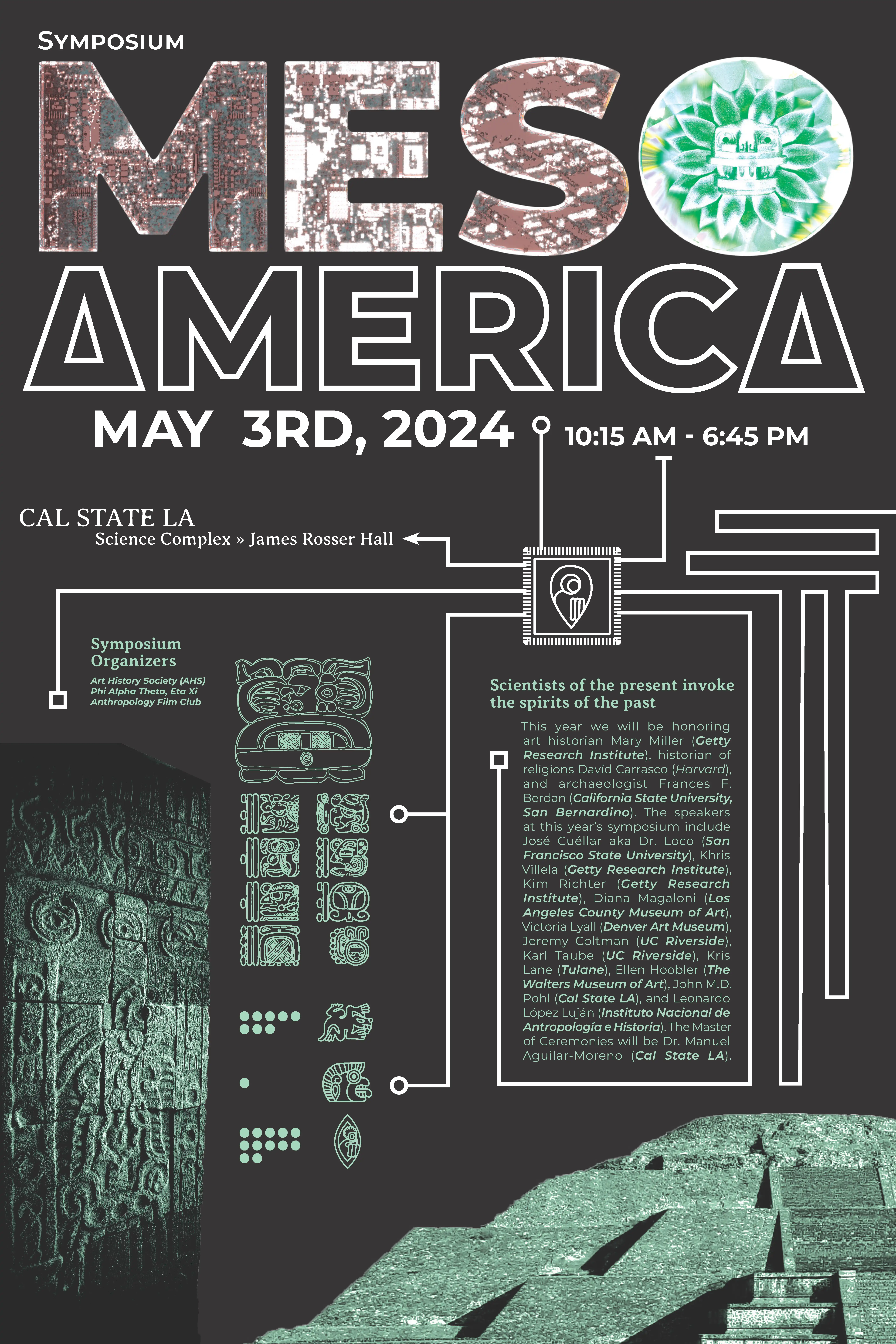
Mesoamerica Symposium Poster
Project Type
Poster Design
3D Design
Art Direction
Programs Used
Illustrator
Indesign
Photoshop
Blender
Overview
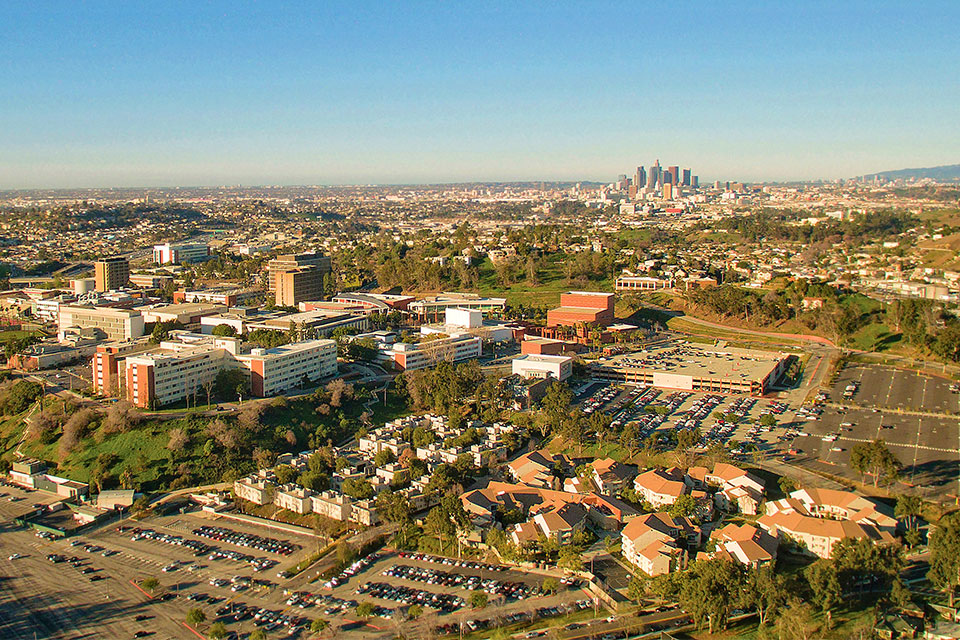
Cal State LA hosts an annual Mesoamerica Symposium every Spring. The Symposium consists of a lecture or lecture series led by academics in the field of archaeology.
My Role
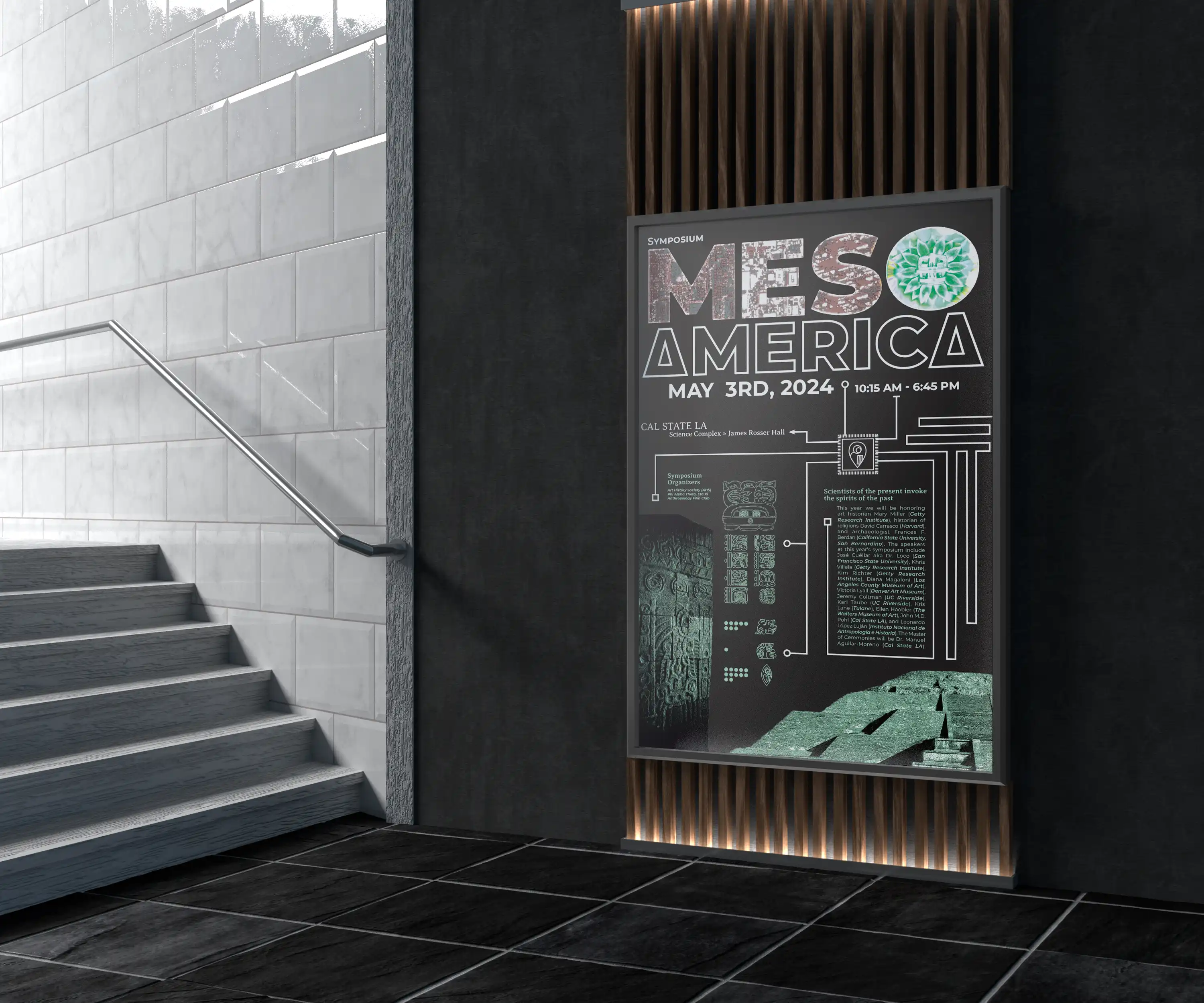
I was tasked with designing and prepress managing a promotional poster for the symposium that would tell audiences the date, time, and location of the event.
Concept & Challenge
My poster design had to reach my target audience of art history and anthropology students, professors, as well as attract people roaming the campus.
Target Audience
Some people find archaeology and art history boring, so I had to figure out a way to create mass appeal for the symposium's subject matter that didn't feel obvious or too rustic.
Process
My solution to this problem was to emphasize an overarching concept that fascinates people about the subject of Mesoamerican studies; Technology.
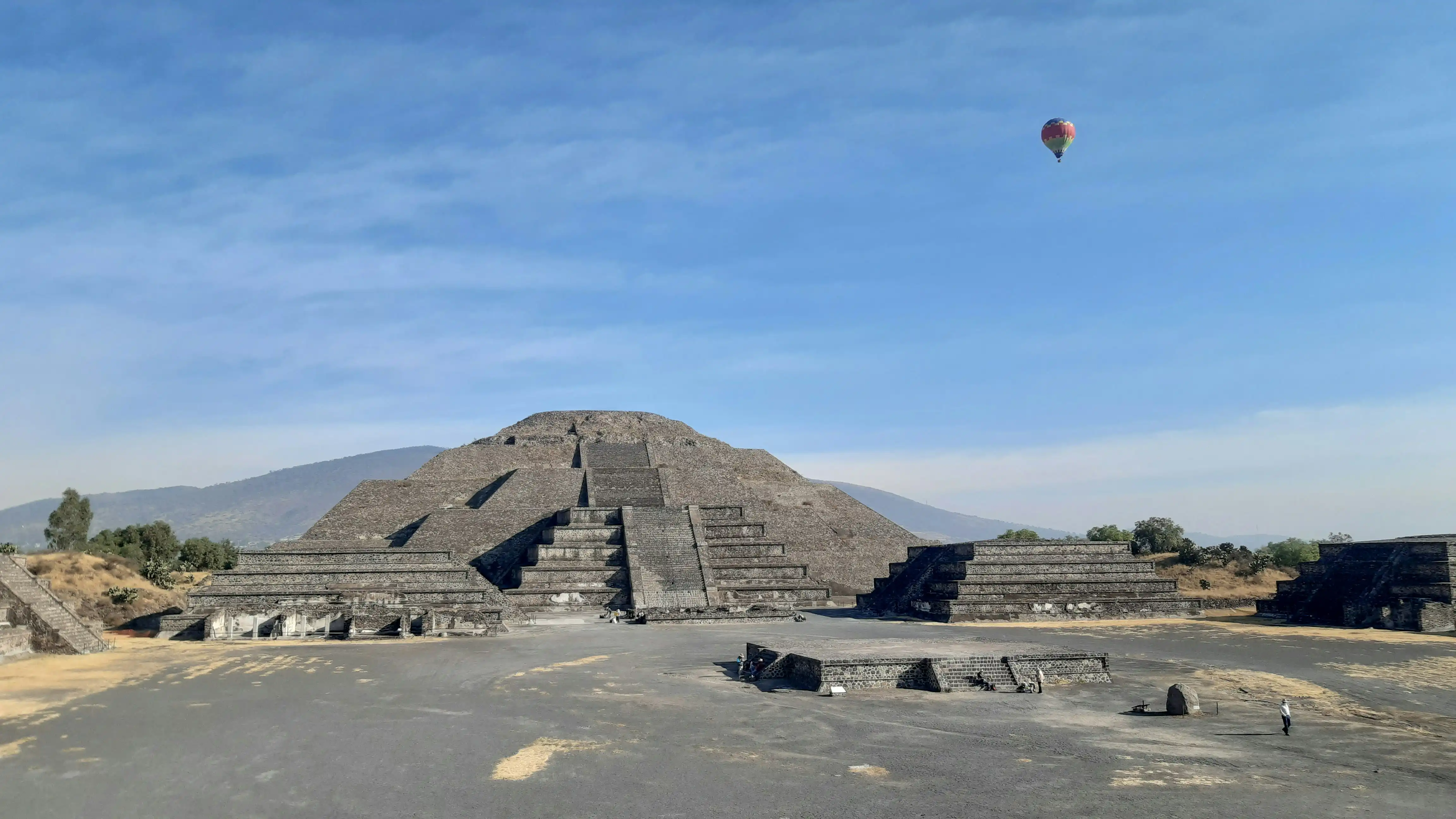
The Ancient Grid
In my research, I found that Mesoamerican civilization used sophisticated layout design to build their infrastructure. I likened this to circuit pathways and pathways of information.
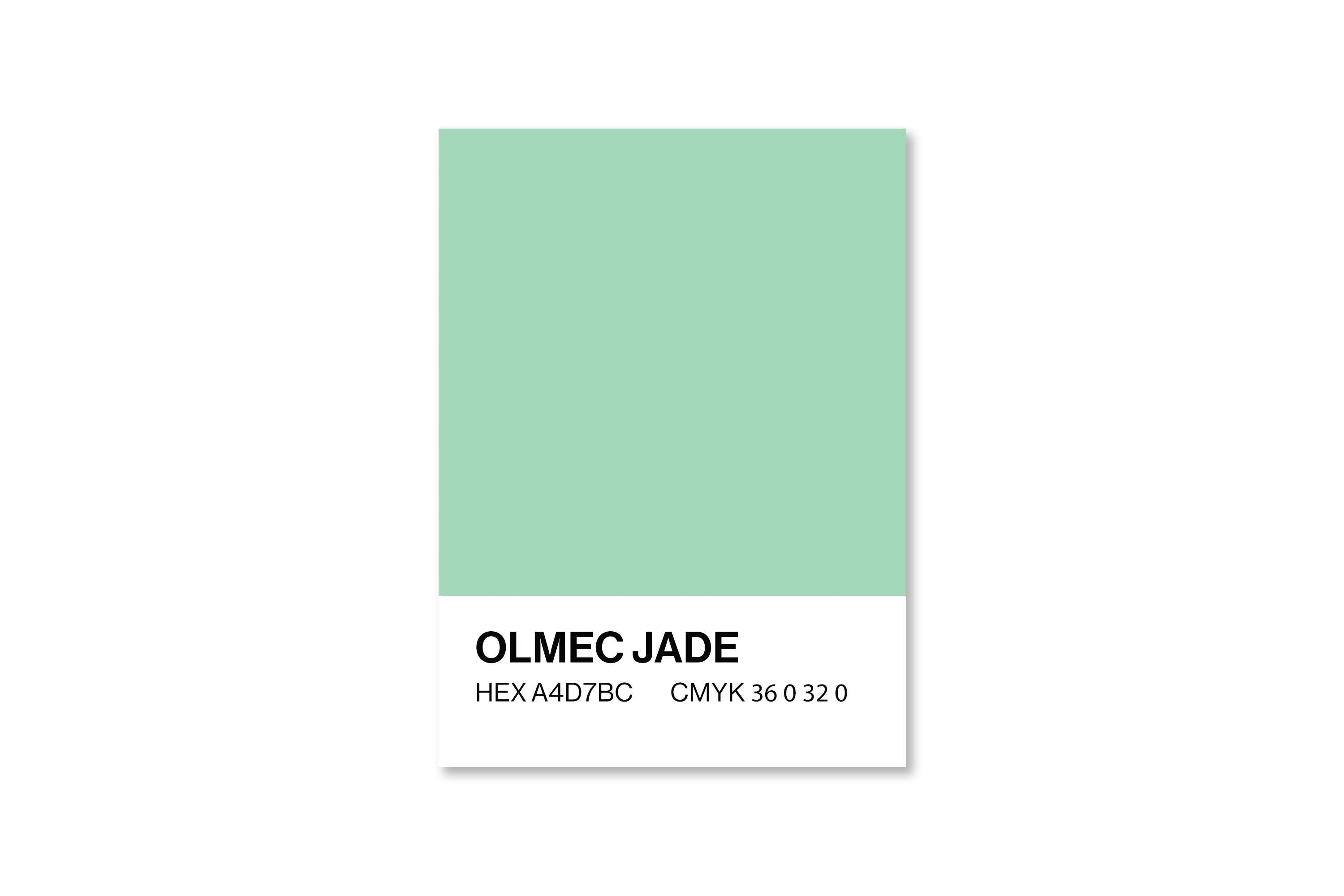
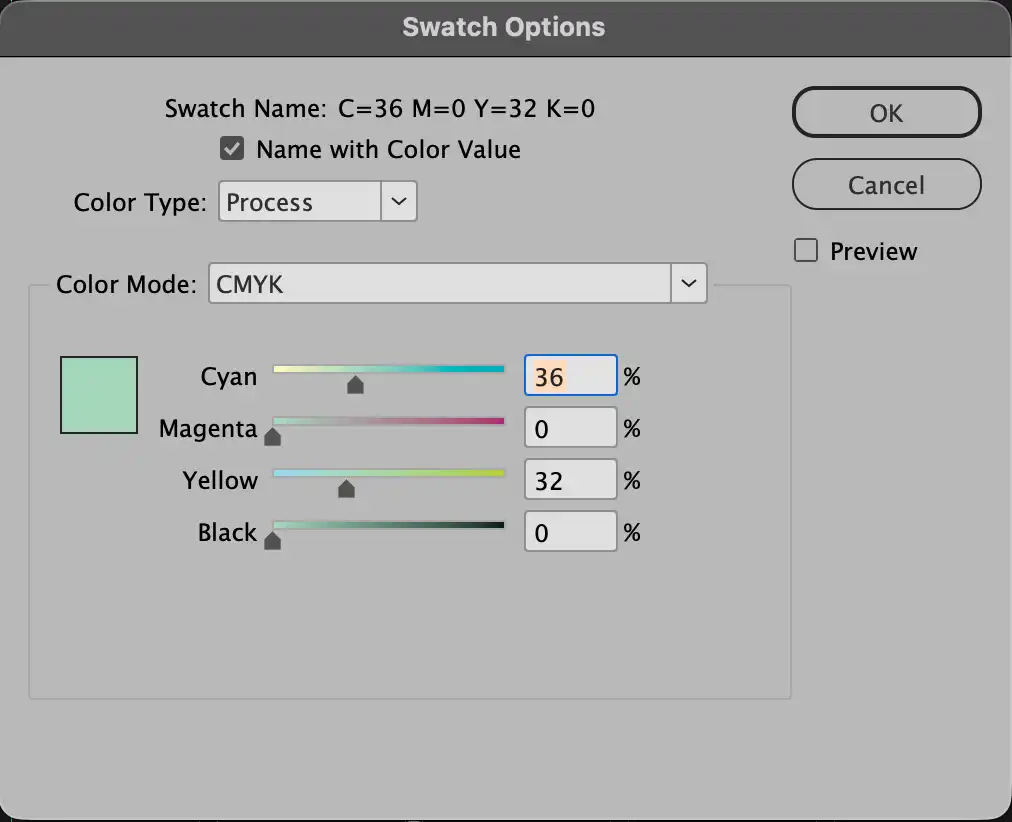
Color Theory and Value
The unsung heroes of my poster design are color and value. I used paper tone/white for highlight, a mixed midtone called Olmec Jade, and black (100K).
These colors carry a lot of the hierarchical weight in the design by emphasizing the most important typographic information on the poster and unifying the colors of the photography and graphic elements.
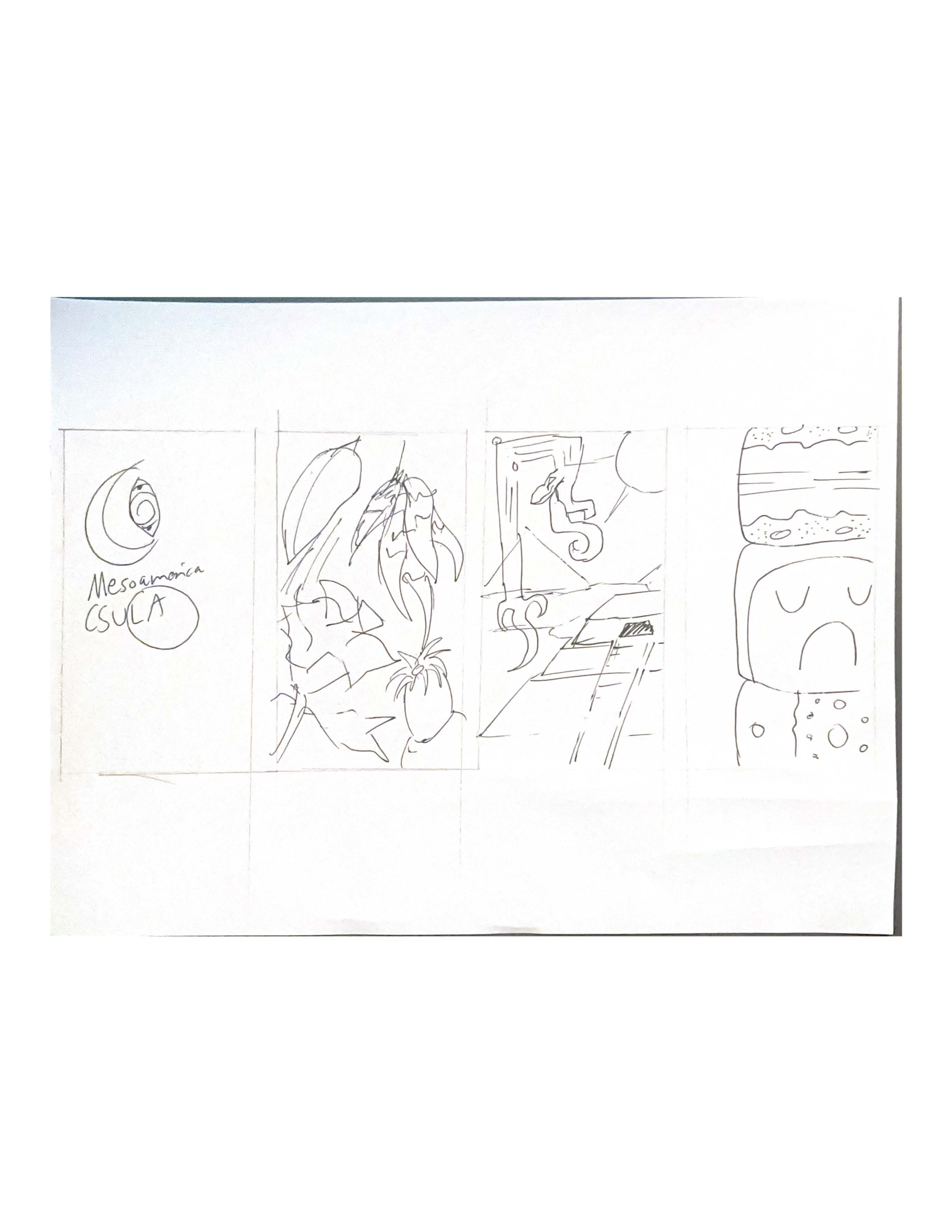
Formal Methods
Poster design process involved the combination of four formal methods (photo, illustration, typography, abstract) to convey the wonder and fascination with technology, science, and naturalistic visual culture.
Typography
For typography I paired 2 contrasting typefaces. First, a sans-serif called Montserrat, a modern typeface that is popular for web design; Second, a serif called Averia Serif Libre, an Oldstyle typeface that has rounded contours that look more rustic and hand-carved.

Found in Translation
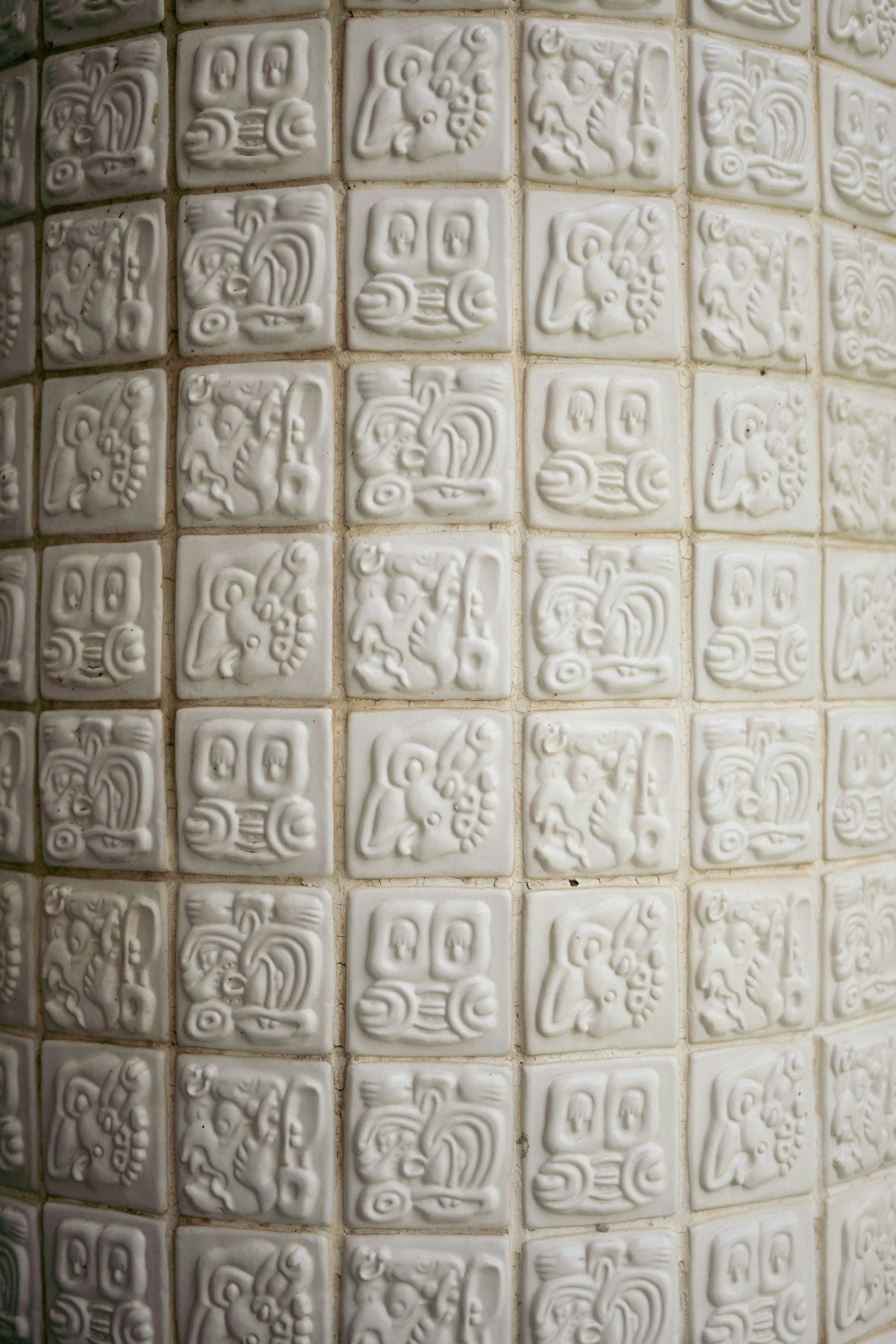
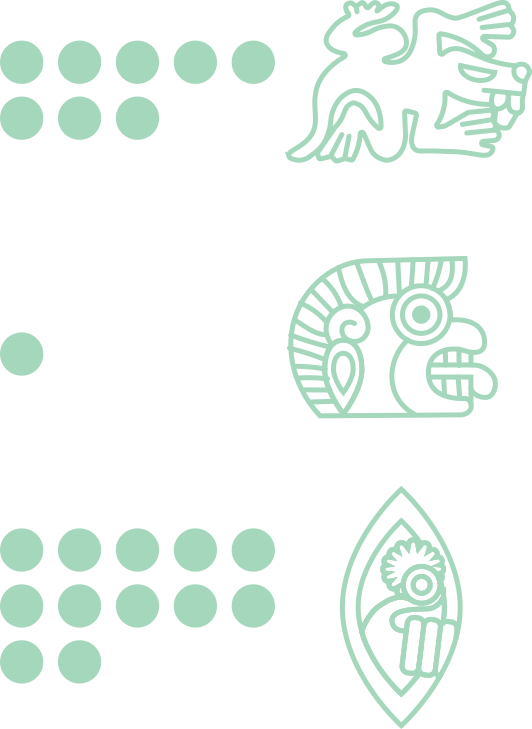
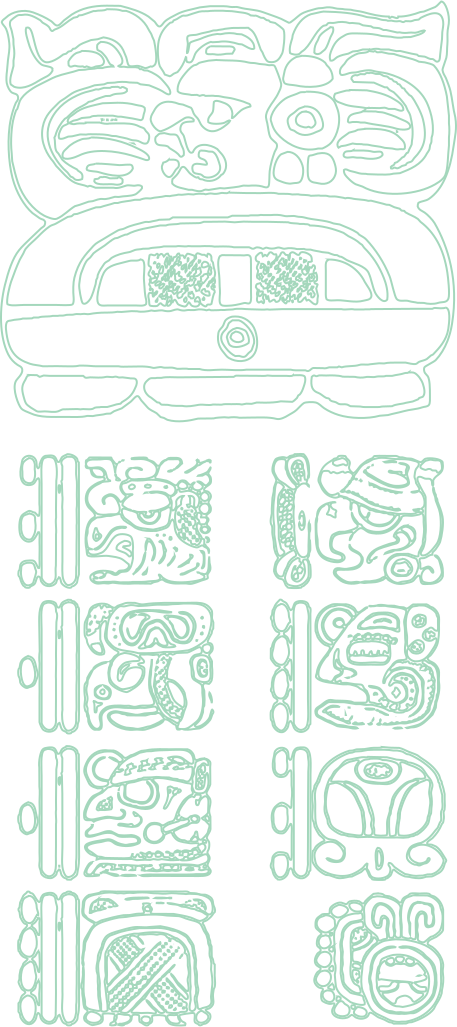
Written language is a core facet of Mesoamerican studies, so I implemented a translation system that would tell the most relevant information with our native alphabet, hieroglyphs, and pictograms.
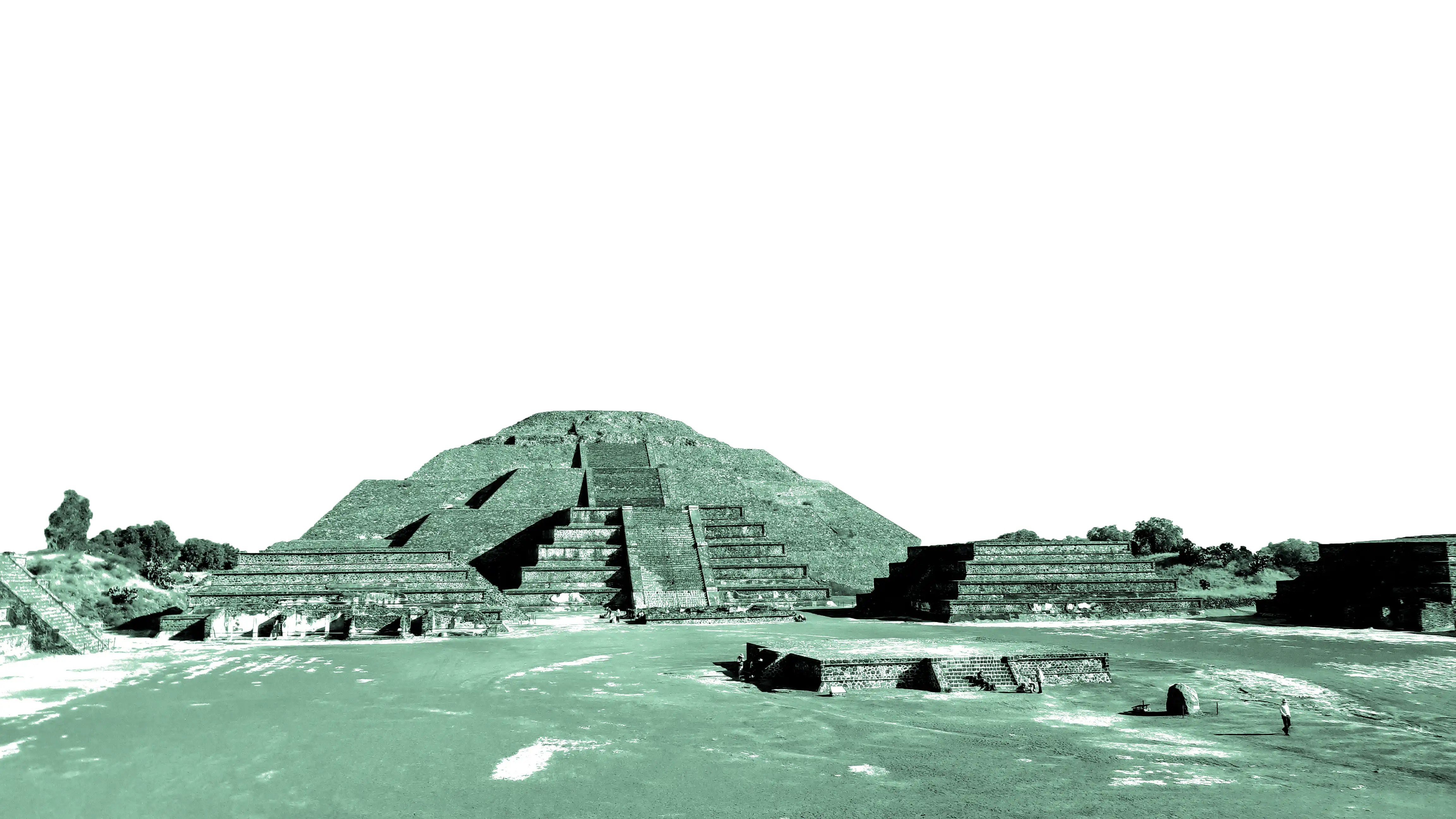
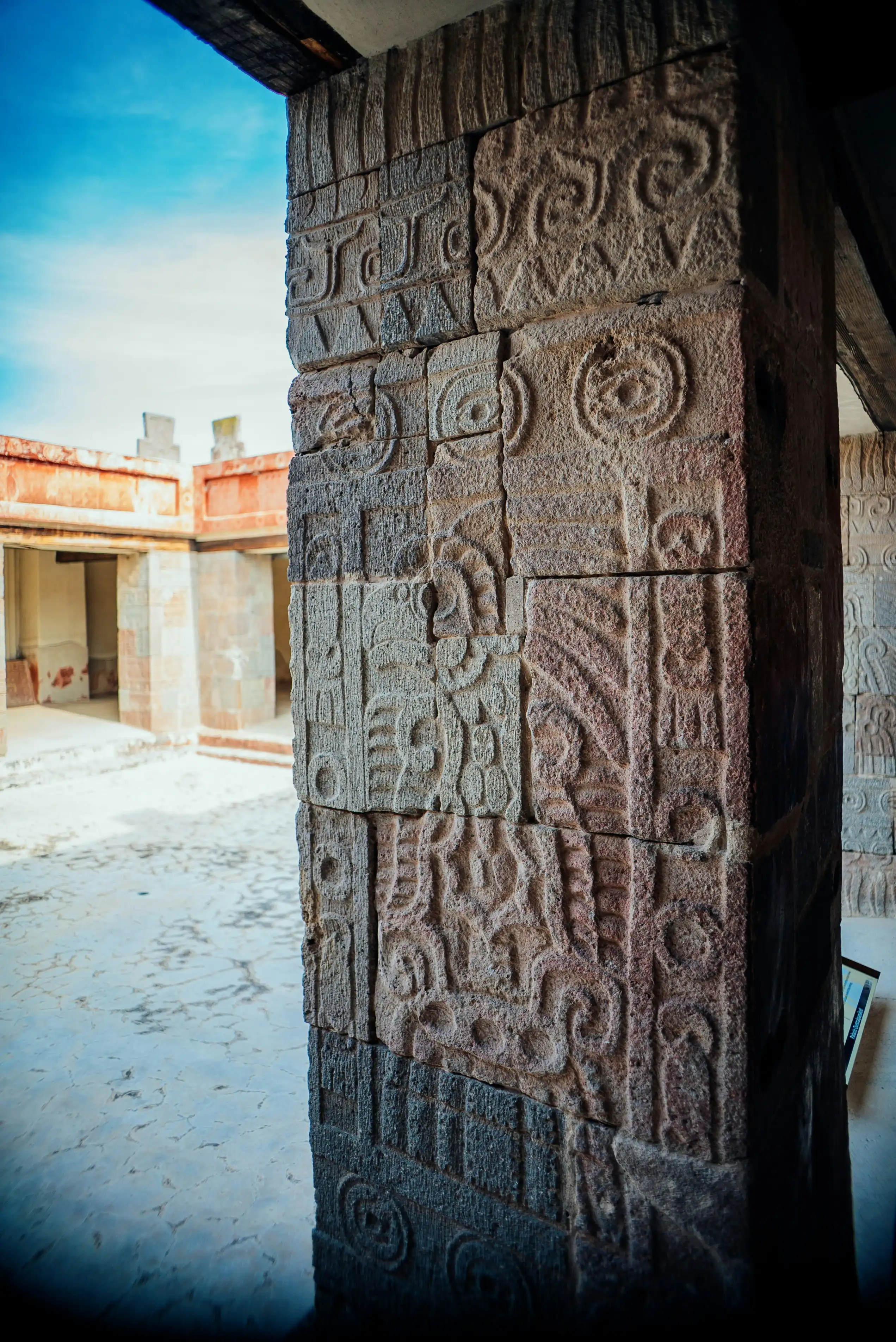
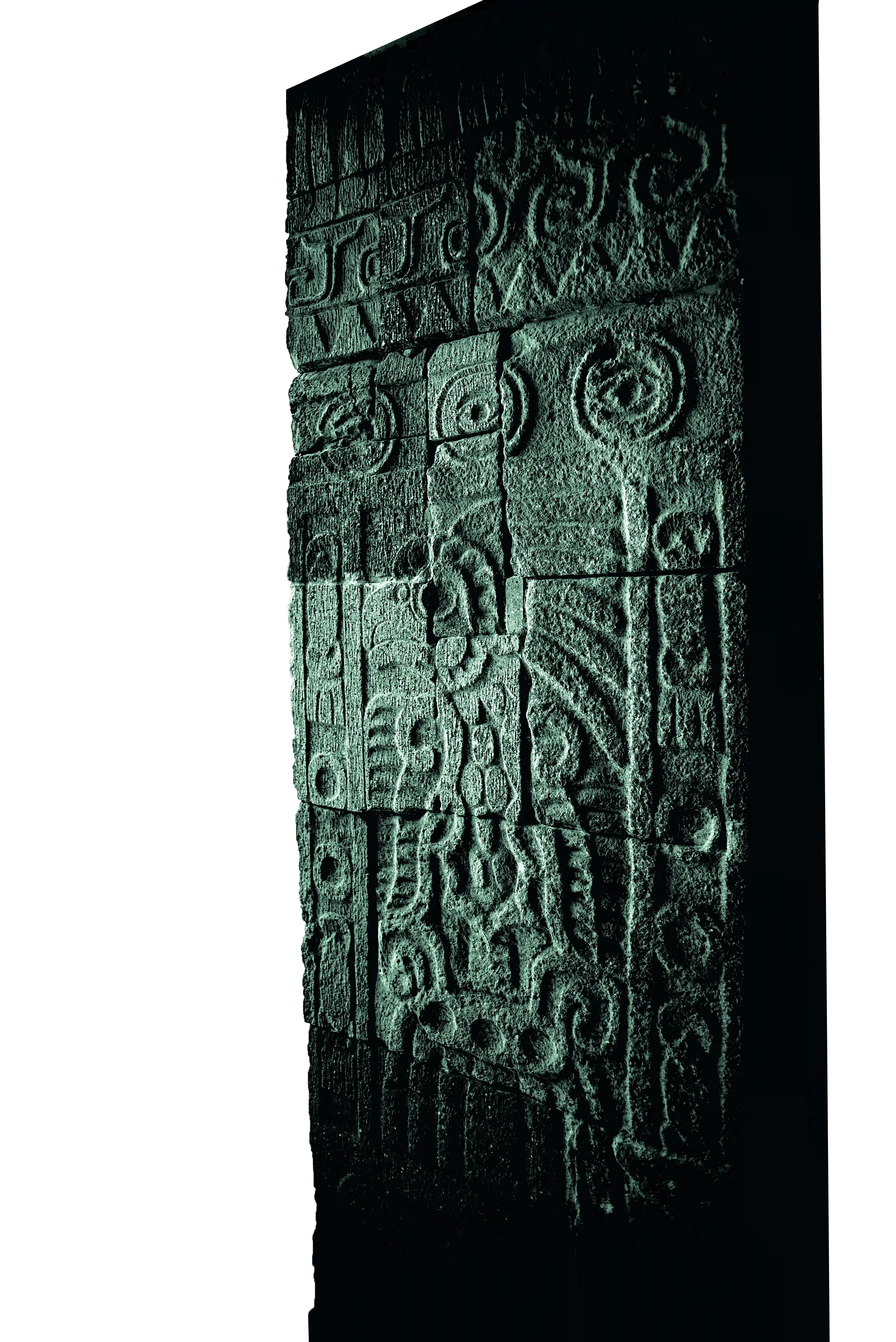
Photo Manipulation
Photos provide a source of vivid texture that feels grounded and corporeal, drawing the viewer to something that is more easily understood than the non-english writing.
3D Assets
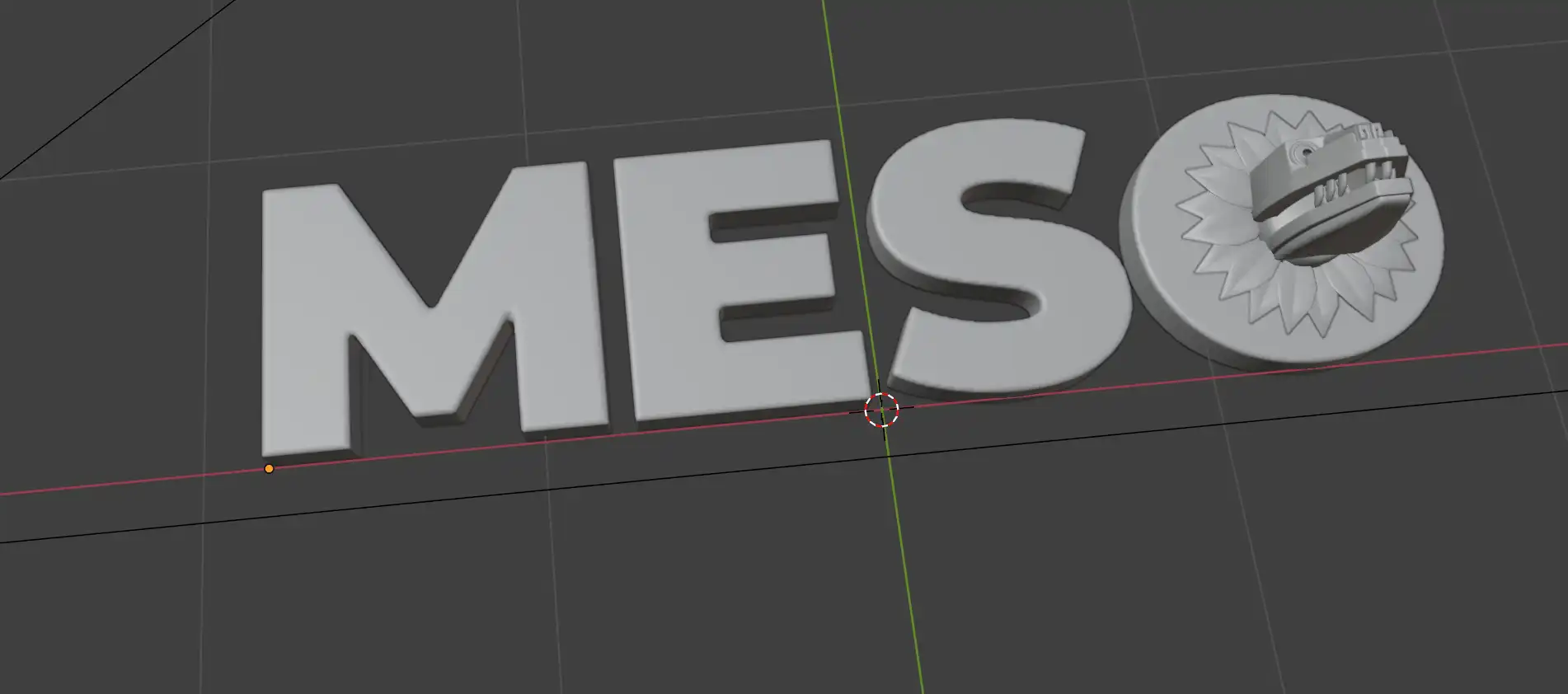
Following the rule of thirds and Gestalt principles, I decided to set the upper third region of the poster for abstract 3D elements to guide viewers' eyes towards the main headline.
Bridging the Past and Present
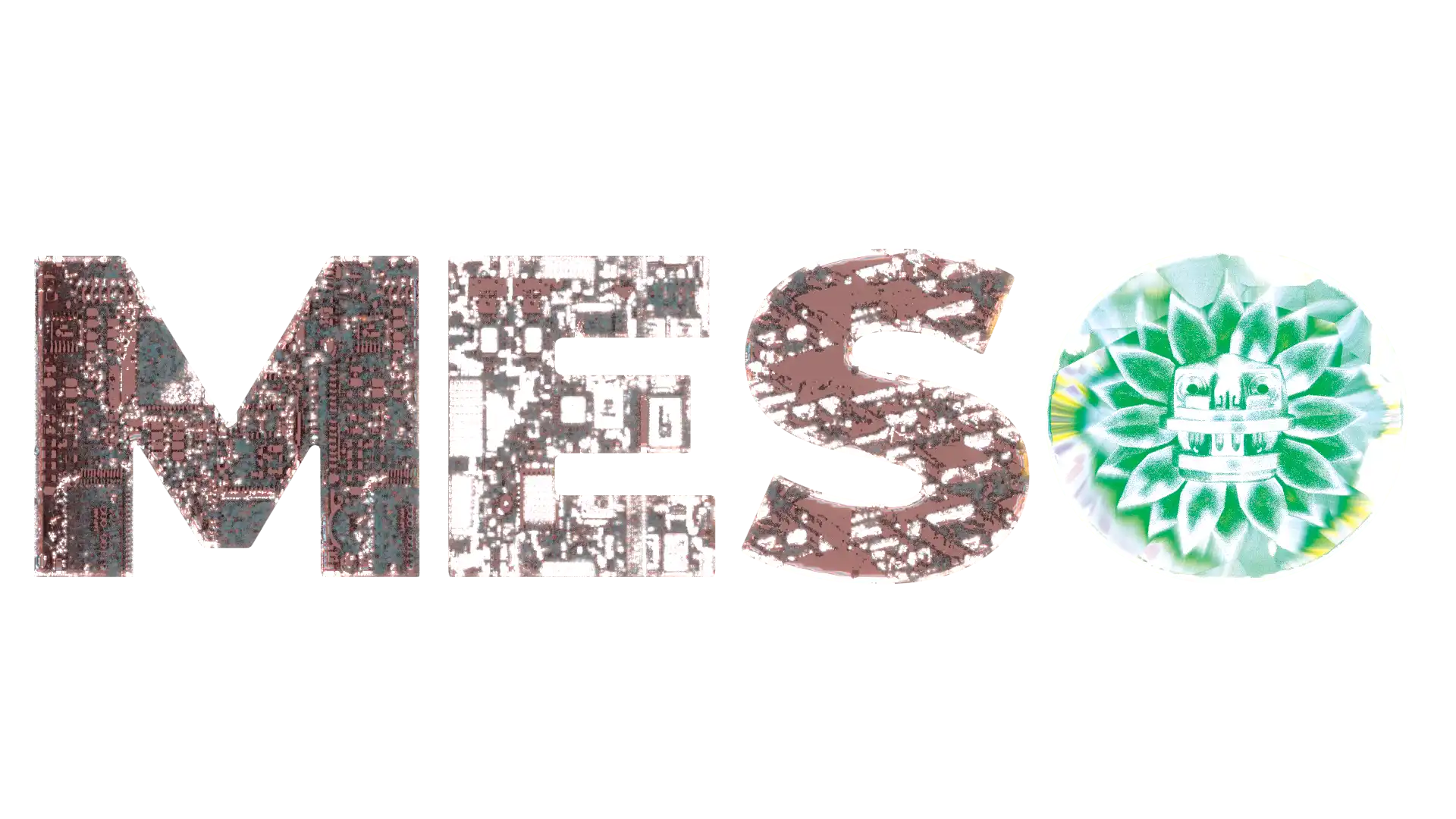
For the "MESO" letters, I extruded text in Blender and applied a procedural texture to it made with photos of Mesoamerican cities and computer motherboards, directly comparing their structure and calling back to the theme of Technology.
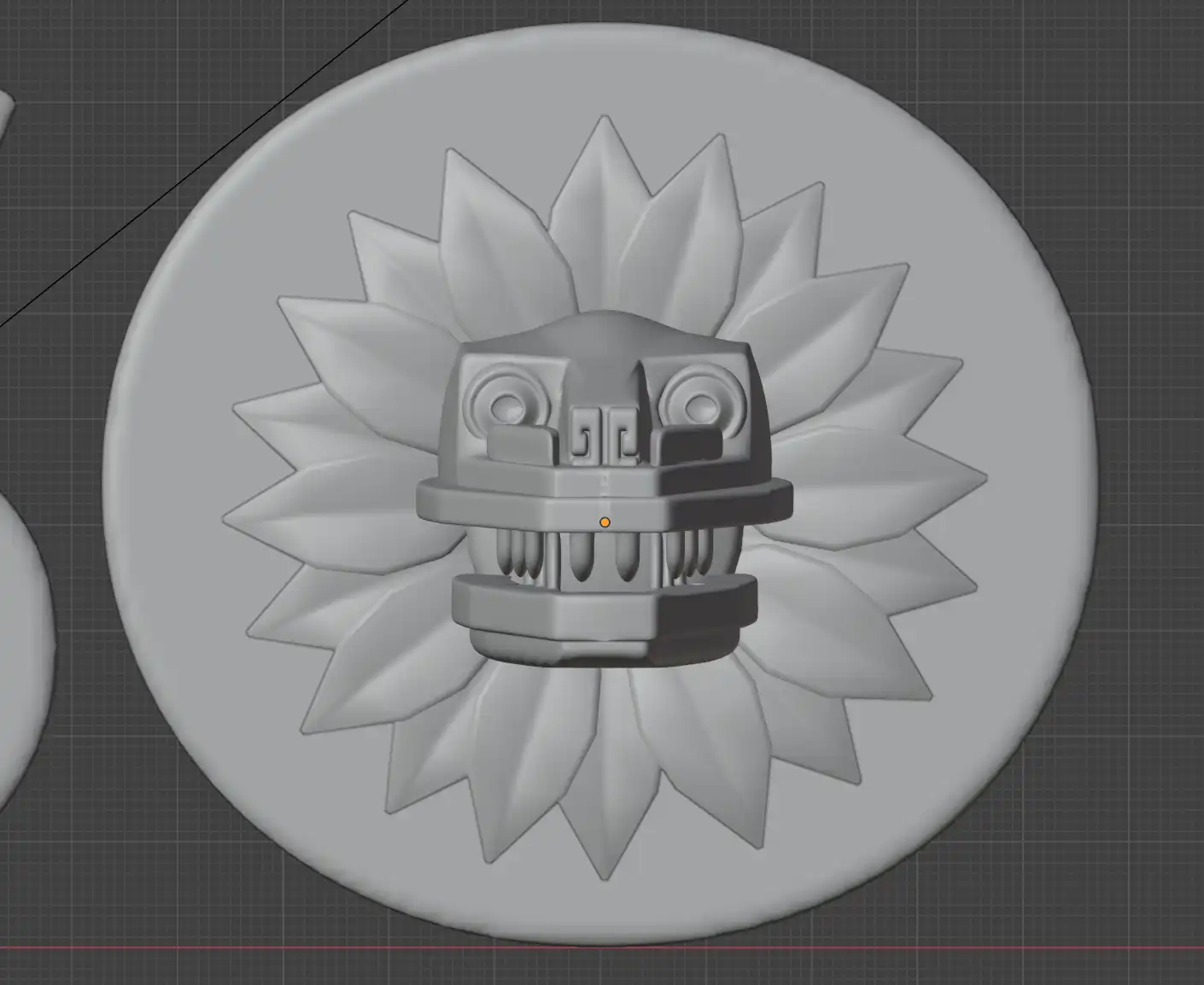
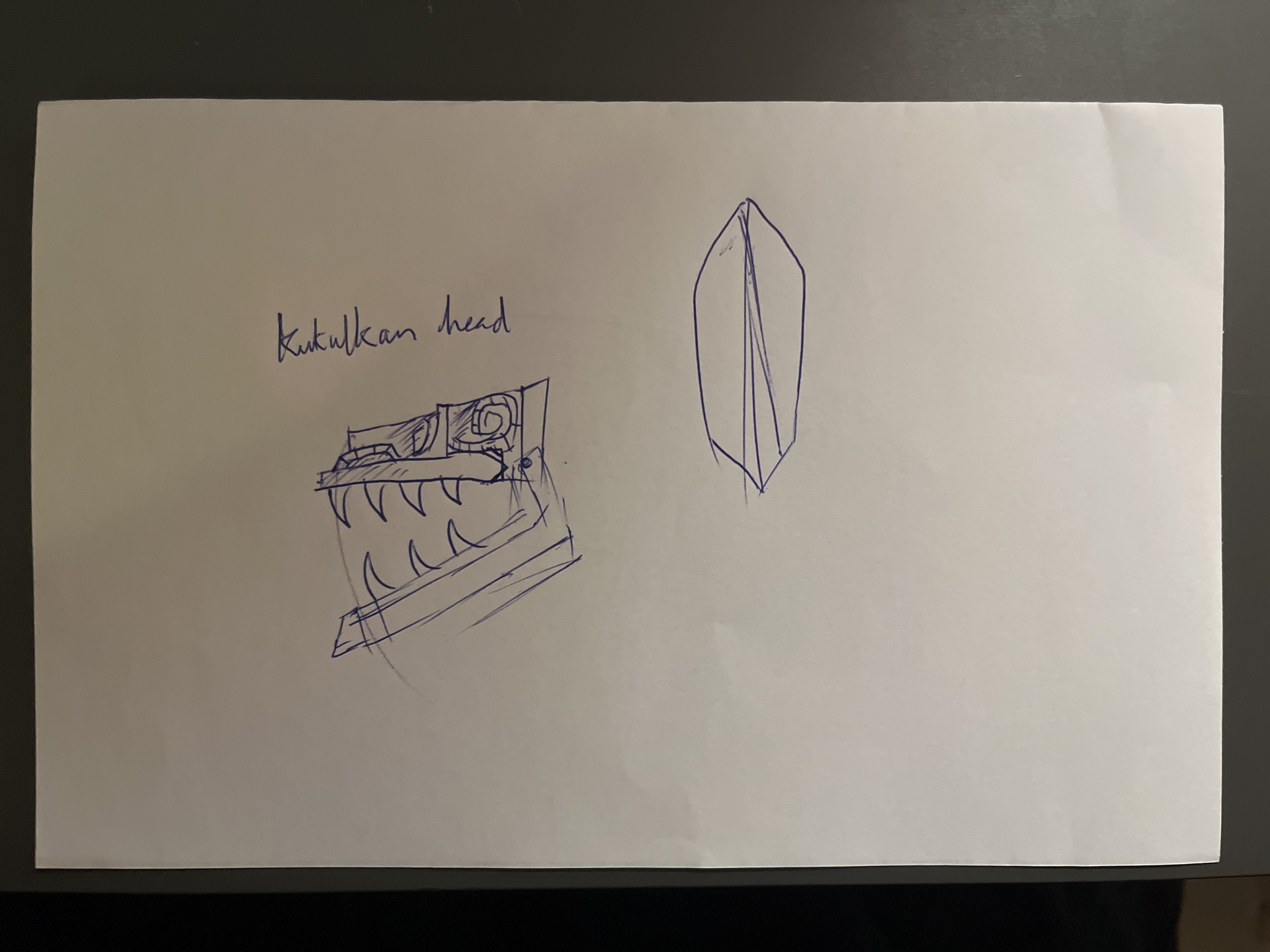
The "O" in "MESO" became a frame for a 3D model I made in Blender inspired by the temple of Kukulkan in Tulum.
The temple, with the serpent heads, is at the ancient city of Chichen Itza, a popular tourist destination and one of the most important archaeological sites in the Americas.
Final Design
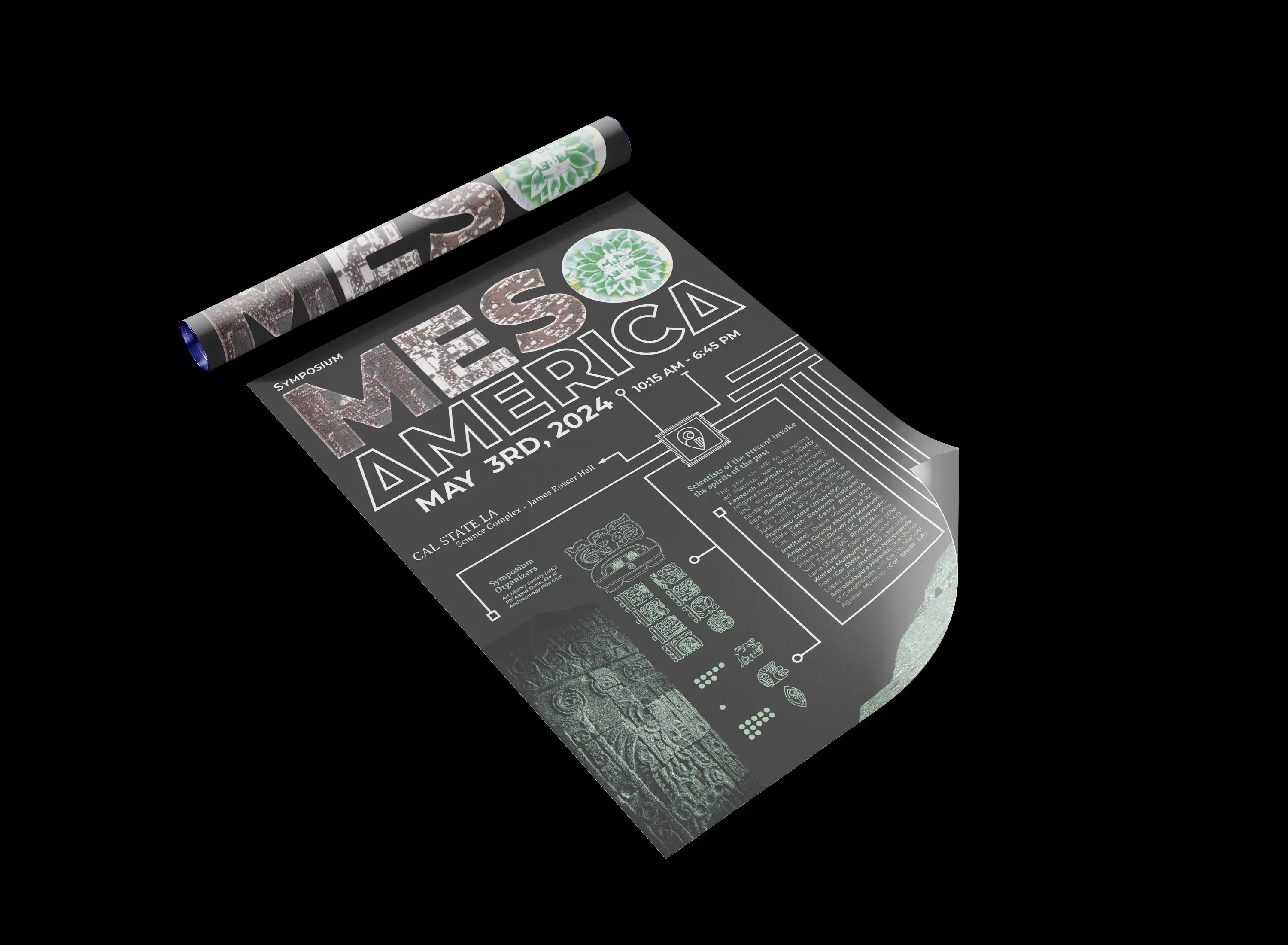
Fractals
The final design of the event poster served as a fractal, or a pattern of infinite complexity at varying scales. The pattern is made up of wayfinders and connectors existing both within the poster itself and the real world, represented by the processor illustration that points to key information of different categories and the overall design serving as a wayfinder of the campus where the poster was put up, guiding audiences to the event location.